Timing your driveway maintenance right is crucial for keeping the asphalt protected against UV damage, water infiltrations, and cracks. The climate in your area is one of the main factors to consider when applying protective coats, as extreme temperatures can affect the quality of the work. Let’s explore the best temperature ranges for asphalt sealcoating in Oregon.
Best Temperature Range for Sealcoating in Oregon by Blackshot Sealcoating
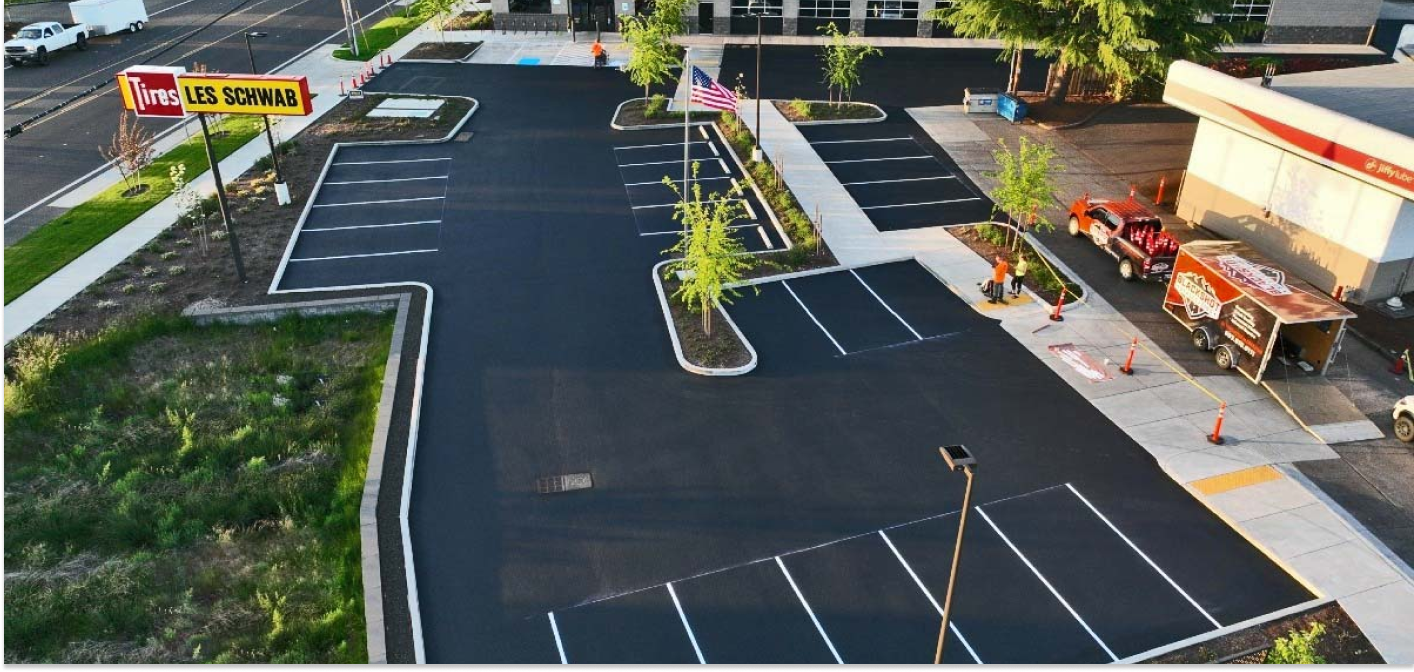
No matter where in Oregon you live, the ideal temperature range for sealing asphalt is 55°F to 90°F, with a sweet spot at around 70°F.
Within this temperature range, the sealer cures at a steady pace while creating a strong bond with the pavement. The optimal curing rate allows you to use the parking lot or driveway sooner, while the sealer remains fluid enough for easy and even application.
However, waiting for the daytime temperatures to get just over 55°F is not enough. The temperature must remain fairly constant and not drop below 50°F for at least 48 hours after application. As such, the best time to sealcoat your pavement in Oregon is the warm, dry season, usually from May to October.
Why Is the Temperature Range Important?
Applying asphalt sealers in temperatures that are too cold or too hot can lead to a number of problems that affect the coat’s quality and durability. In temperatures below 50°F, the sealer might not bond properly with the asphalt, leaving it vulnerable to peeling and water damage. Cold temperatures may also thicken the sealer, making application more difficult and potentially leading to uneven coating, slowing down the curing process.
Conversely, temperatures above 90°F can cause the sealer to cure too fast, trapping solvents within the layer. This could lead to cracking, bubbling, and an overall weak finish.
Other Environmental Factors Affecting Asphalt Sealer Application
Rain
Beyond the environmental temperature, rain is the main factor that can ruin a fresh sealcoat application. The water on the asphalt surface will prevent the sealer from bonding properly, which is why the coat should only be applied on a warm and dry day with a clear forecast for at least 48 hours after application.
Wind
Strong winds are another factor to consider, as they can make it difficult to apply the sealer evenly. Wind can also blow dust and debris onto the fresh coat, leading to surface imperfections. These imperfections can prevent the sealer from bonding with the pavement, creating weak spots that will wear out faster.
Excessive Air Moisture
High air humidity levels affect asphalt sealing more like cold weather than rain by preventing proper curing. While Albany doesn’t experience the same humidity levels as the areas closer to the coast, the relative air humidity can be high during early spring and late fall.
Get a FREE estimate
Choosing the wrong time to seal your pavement could result in costly mistakes. To prevent them, contact us at Blackshot Sealcoating in Willamette Valley, OR for a FREE estimate and let our skilled team take care of all your driveway or parking lot maintenance needs.