
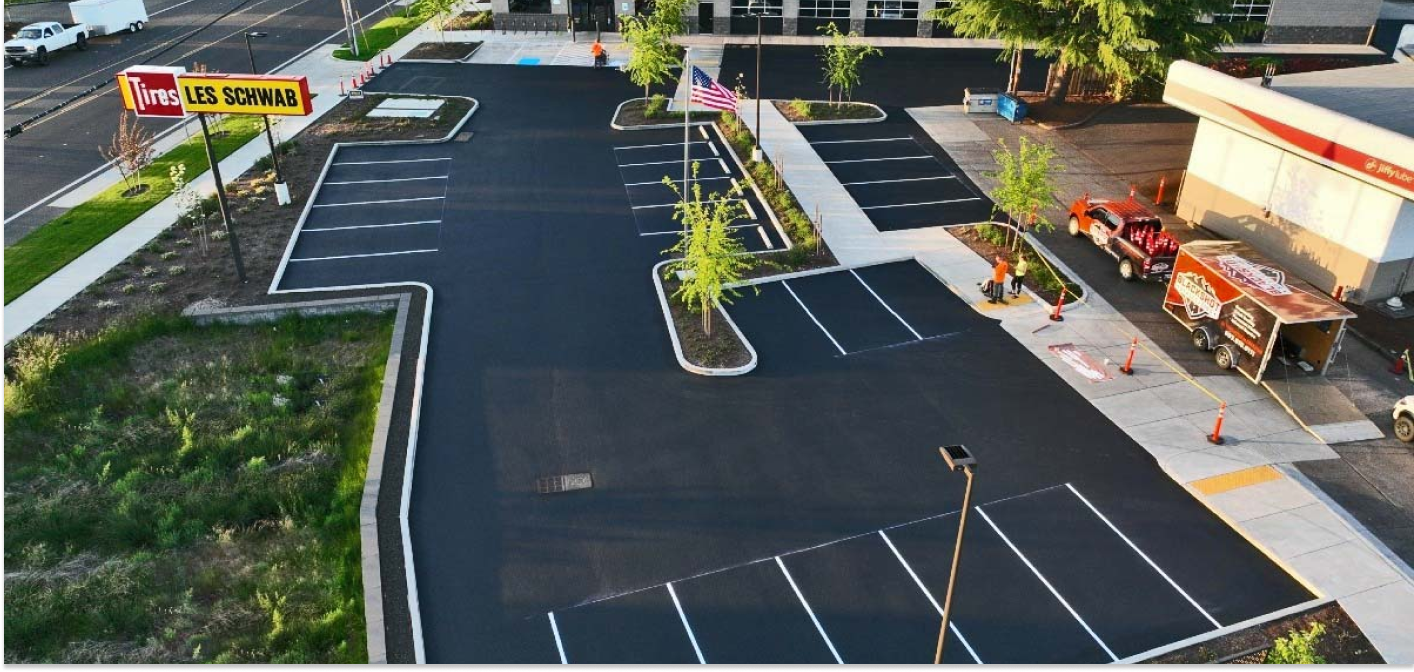
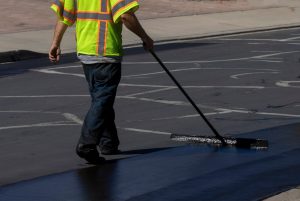
 While sealcoating helps extend your asphalt’s lifespan and keep it looking its best, failing to reseal the surface can be detrimental to your pavement. Here’s how often you should seal coat your asphalt in Oregon according to our skilled Willamette Valley sealcoating team.
Asphalt Sealing Frequency ExplainedSealcoating asphalt surfaces is essential, but you should only seal the surface for the first time about 12 months after installation. Earlier sealing could trap moisture and other substances in the asphalt, resulting in cracks and faster deterioration. As long as the surface has been sealed correctly, you should have the surface resealed every three to five years.
Resealing more frequently could result in sealcoating build-up, which could turn the surface brittle and increase the risk of asphalt damage. The actual resealing frequency can be influenced by a variety of factors, including the quality of the sealer and the quality of its application.
4 Factors Affecting Asphalt Sealcoating Frequency
Application Quality
The main factor determining sealcoating frequency is the quality of the application. All sealers, including asphalt emulsions and refined coal tar, must be diluted to enable product flow, resulting in a uniform application and longer-lasting result. However, adding too much water can be detrimental. At Blackshot Sealcoating, our skilled team always respects the sealer manufacturer’s application recommendations and never waters down a product.
As a result, the sealer adheres perfectly to the asphalt surface, ensuring long-lasting durability. We also know how to select the best sealers that can withstand heavy traffic volumes and the unique weather challenges characteristic to various parts of the state.
Condition of the Asphalt
Old or damaged asphalt may require sealcoating more frequently than new or well-maintained surfaces. For this reason, cracks and other damages should be addressed before sealing the surface.
Traffic Volume
Sealcoating lasts much longer on asphalt surfaces that experience low traffic volume, such as residential driveways. When the asphalt is applied and sealed correctly, it could take up to five years before needing to reseal the surface. Surfaces that experience high traffic volumes, such as parking lots, usually need resealing after about three years.
Environmental Factors
The climate in your area is another factor affecting sealcoating frequency. In Western Oregon, for instance, driveways and parking lots directly exposed to the hot summer sun are susceptible to UV damage. The higher amount of precipitation also affects the sealer’s durability, so asphalt surfaces in this area may require more frequent sealcoating than driveways and parking lots in Eastern Oregon, where the weather is cooler and drier year-round.
Signs Your Asphalt Needs Fresh Sealer
While figuring out how often your asphalt needs sealcoating can be challenging, there are some telltale signs it is time to call in the professionals. A fading color of your driveway is one of the main indicators that it is time to reseal. A sealant coat that starts to peel or looks brittle is another clear sign you need to reseal the surface. Water pooling on the driveway instead of draining properly also means your asphalt needs maintenance.
Contact our Willamette Valley, OR Sealcoating Company for a Free Estimate
Ready to find out if it is time to reseal your driveway? Contact us at Blackshot Sealcoating serving the Portland, Salem, and Eugene, OR areas to have all your questions answered and get a free estimate.